
Every GTA Map Compared
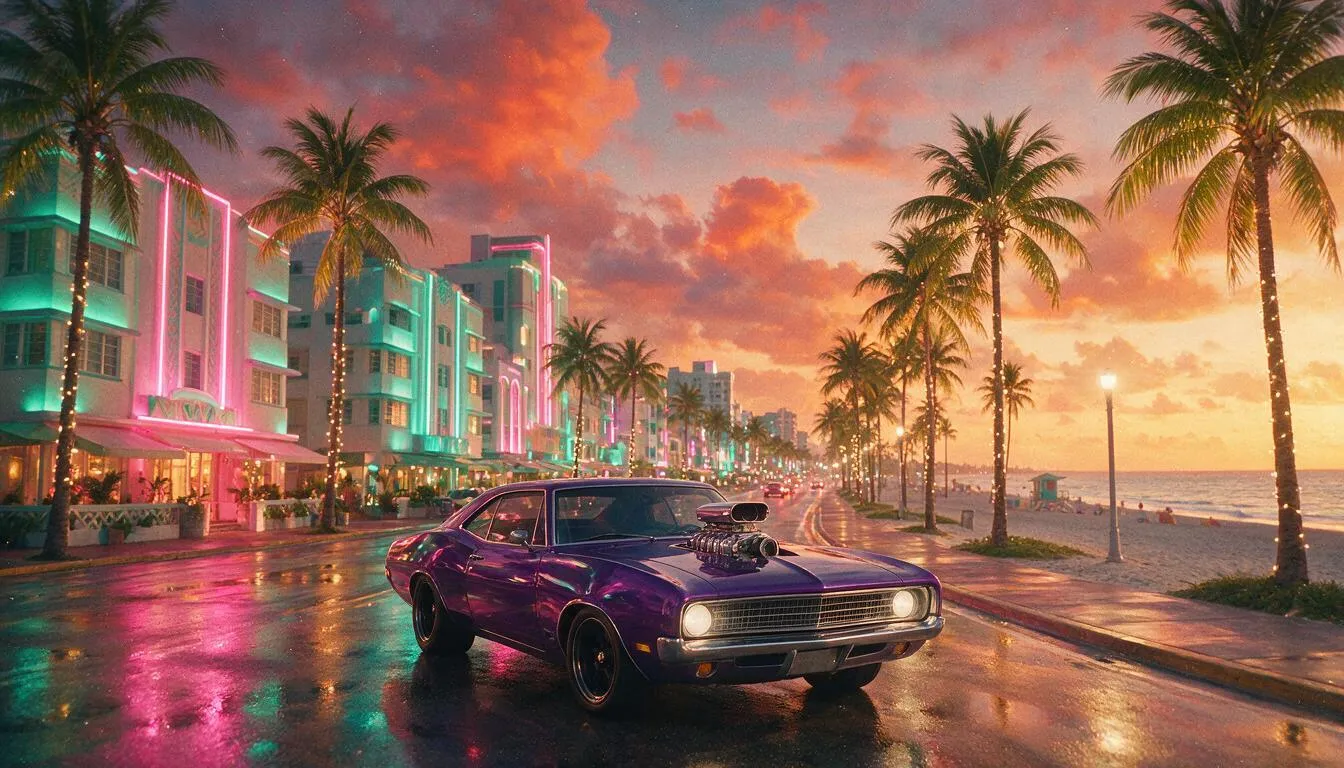
GTA maps evolved from focused cities into broader regions combining urban centers, countryside and wilderness. Leonida continues that direction, but Rockstar has not published its area or a verified comparison with GTA V.
Mainline GTA settings at a glance
The series has revisited city names across different technical and continuity eras. A returning name does not mean an identical street layout. This table keeps the comparison to well-established mainline settings and avoids unsupported measurements.
| Game | Release year | Main setting | Broad real-world inspiration |
|---|---|---|---|
| Grand Theft Auto | 1997 | Liberty City, San Andreas and Vice City | New York, San Francisco and Miami |
| Grand Theft Auto 2 | 1999 | Anywhere City | Fictional retro-futuristic American city |
| Grand Theft Auto III | 2001 | Liberty City | New York City and other East Coast influences |
| Grand Theft Auto: Vice City | 2002 | Vice City in 1986 | Miami |
| Grand Theft Auto: San Andreas | 2004 | State of San Andreas | California and the American Southwest |
| Grand Theft Auto IV | 2008 | Liberty City | New York City |
| Grand Theft Auto V | 2013 | Los Santos and Blaine County | Los Angeles and Southern California |
| Grand Theft Auto VI | 2026 | State of Leonida | Florida, led by Miami-inspired Vice City |
The full game-order guide explains how the major entries fit together.
From overhead cities to the 3D era
The original Grand Theft Auto used overhead maps and already introduced the names Liberty City, San Andreas and Vice City. Its spaces were built around quick vehicle movement, missions and urban navigation rather than the continuous third-person presentation later associated with the series.
GTA III changed the design language in 2001. Its Liberty City gave players a dense third-person urban environment organized across distinct areas. Streets, bridges and elevation created recognizable routes, while the city itself became a central character in Claude’s story.
Vice City followed in 2002. Its coastal layout, palms and colorful architecture created a different identity from Liberty City’s gray density. The 1986 setting shaped the vehicles, music and visual atmosphere around Tommy Vercetti. Although both games were city-focused, their street patterns and environmental moods made navigation feel different.
San Andreas makes the state the map
Grand Theft Auto: San Andreas expanded the 3D-era formula into the fictional state of San Andreas. CJ’s journey moved between cities, countryside, desert and smaller communities. The distances and environmental changes became part of the experience rather than space outside a single metropolis.
That expansion established a map structure later entries would reinterpret:
- a main story capable of moving through multiple urban areas;
- highways and rural roads connecting population centers;
- terrain changes that create regional identity;
- countryside used for missions and exploration;
- a world understood as more than one city grid.
It is tempting to compare maps only by area, but design density and travel structure matter too. A compact city can contain more intersections and vertical visual detail than a larger rural stretch. Rockstar has not provided one standardized metric across every release.
GTA IV returns to urban density
GTA IV’s 2008 Liberty City reimagined the location for the HD era and Niko Bellic’s story. It emphasized a dense metropolitan environment rather than a large surrounding countryside. Borough-like areas, bridges and waterways helped produce local identity within one connected city.
This map demonstrates why reused place names should be treated as reinventions. GTA III’s Liberty City and GTA IV’s Liberty City share a broad New York inspiration but are not the same asset or exact layout. The newer version reflects a different era, technology and story.
| Liberty City version | Design emphasis |
|---|---|
| GTA (1997) | Overhead urban map |
| GTA III (2001) | Foundational third-person 3D city |
| GTA IV (2008) | HD-era metropolitan density and detail |
Vice City follows the same principle in GTA 6: the name returns, but the present-day location is a new interpretation.
GTA V balances city and countryside
GTA V moved the series to Los Santos and Blaine County in 2013. Michael, Franklin and Trevor operate across a map that combines a large urban core with beaches, highways, desert communities, hills and the countryside around Mount Chiliad.
Los Santos provides street density, neighborhoods and a downtown skyline. Blaine County creates space for longer drives, aircraft and missions far from the city center. The continuous landmass makes the contrast between metropolitan and rural life part of ordinary travel.
GTA V is useful for comparing Leonida’s structure, but not its scale. Both settings combine a major city with varied land outside it. Rockstar has not said that GTA 6 follows GTA V’s progression or city-to-countryside ratio.
Where Leonida fits
GTA 6 takes place across Leonida, a fictional present-day Florida. Its officially named regions already establish the broadest environmental outline:
| Leonida region | Confirmed identity |
|---|---|
| Vice City | Main coastal metropolis with beaches and nightlife |
| Leonida Keys | Southern island chain and Jason’s home turf |
| Grassrivers | Everglades-style wetlands with airboats and alligators |
| Port Gellhorn | Gulf-coast port town |
| Ambrosia | Inland agricultural country |
| Mount Kalaga | Northern wooded highlands with a state park |
This list suggests a state designed around strong regional contrasts: dense coast, islands, wetlands, port, farmland and highlands. “Suggests” should not be confused with a size figure. Six named regions could be arranged at many scales, and Rockstar has not released their borders.
The map and setting guide covers each one without assigning unofficial dimensions.
Vice City then and now
The most direct historical comparison is between GTA: Vice City and GTA 6. The earlier game is set in 1986 and centers on Tommy Vercetti. GTA 6 is present day, stars Lucia Caminos and Jason Duval, and places its modern Vice City inside a wider state.
| Comparison | Vice City (2002) | GTA 6 |
|---|---|---|
| Era | 1986 | Present day |
| Geographic frame | City | State of Leonida |
| Lead structure | Tommy Vercetti | Lucia and Jason |
| Contemporary media | 1980s radio and culture | In-world social media clips |
| Known map status | Fully established by release | Size and district boundaries unpublished |
Art-deco architecture, tropical coastline and the Miami inspiration provide continuity. Modern high-rises, smartphones and a statewide cast mark the difference. Read Vice City explained for a closer look at the new city.
What is unknown about GTA 6’s map
As of July 21, 2026, Rockstar has not announced:
- Leonida’s total map area;
- whether it is larger or smaller than GTA V’s map;
- the precise placement and size of all six regions;
- the number of cities, towns or islands;
- the number of enterable interiors;
- whether the full state is open at the beginning;
- how long cross-state travel takes.
Map area alone would not describe road complexity, verticality or destination density. Any exact square-mile figure or definitive “twice as big” claim is unverified. The GTA 6 map-size page follows that question, while the confirmed overview is the safer reference for announced details.
Leonida’s place in the series is nevertheless clear. It extends the evolution from city maps to regionally varied states, returns to a modern Vice City and gives the surrounding landscape a named identity before release. Its rank by physical size remains unknown until Rockstar supplies measurements or the released game can be assessed consistently.
Frequently asked questions
What is the biggest GTA map?
Among released mainline games, GTA V offers the broad state-style landmass of Los Santos and Blaine County. Rockstar has not published GTA 6's dimensions, so no verified size ranking can place Leonida yet.
Is the GTA 6 map bigger than GTA 5?
Rockstar has not announced GTA 6's map area or confirmed that it is bigger than GTA V. Leonida has six named regions, but region variety does not provide a reliable square-mile comparison.
What real city is each GTA map based on?
Liberty City broadly draws from New York City, Vice City from Miami, and Los Santos from Los Angeles. San Andreas expands its inspirations across parts of California and the American Southwest, while Leonida is a fictional Florida.
Does GTA 6 include the old Vice City map?
GTA 6 returns to Vice City, but Rockstar presents a new present-day interpretation inside Leonida rather than announcing the 2002 map as a reused layout.
How many regions are confirmed in GTA 6?
Six are officially named: Vice City, Leonida Keys, Grassrivers, Port Gellhorn, Ambrosia and Mount Kalaga. Their exact borders and sizes are unpublished.